
Check Engine Light Diagnostics in Powhatan, VA

We Troubleshoot and Fix All Problems! – Murray Automotive
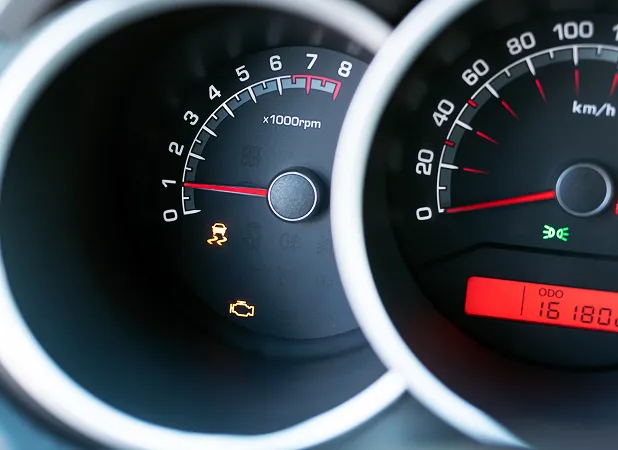
Is your car’s check engine light on? While it may be daunting to see at first, it’s equally helpful in letting you know that something is not right in your vehicle. The check engine light is essentially a catch-all for any number of error codes your car’s on-board diagnostics system (OBD-II) generates as it monitors vehicle performance. You may just see the check engine light illuminated, but internally, the respective diagnostic trouble code (DTC) has been sent to the car’s computer system. Through check engine light diagnostics, we can retrieve the code that represents where the issue lies. Here at Murray Automotive in Powhatan, Virginia, you can count on us to troubleshoot the problem and provide the necessary repair!

Reasons for the Check Engine Light to Illuminate
When a current or potential problem is recognized in your engine, transmission, and/or emissions system, you’ll see the check engine light turn on. The problems that trigger it range in severity as it can be due to a miniscule issue or a more severe complication. A minor and easy fix is a loose gas cap. When the fuel tank isn’t properly sealed, outside air can infiltrate the system, and fuel vapors can leak from the system. Additional problems include a faulty catalytic converter, worn spark plugs or spark plug wires, a defective mass airflow or oxygen sensor, or bad ignition coils—plus many more, which will be deciphered with check engine light diagnostics. If you experience a flashing check engine light, we advise pulling over when safe and turning off your car; this is usually indicative of a severe issue, and we don’t recommend driving.
How We Perform Diagnostics
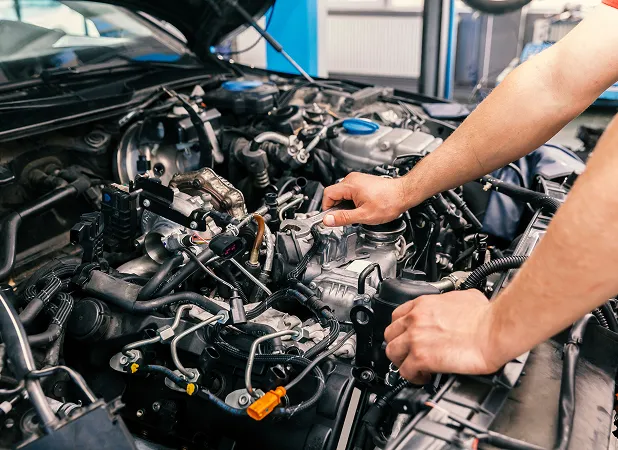
Figuring out the problem is a simple but intricate process. We use what are called code reading/code scanning tools. We attach the check engine light diagnostics technology to your vehicle’s OBD-II port, which is normally located near the steering wheel, and recover the DTC from the computer system. A lot of different codes can be generated, which is why it’s important to get a professional reading for accuracy. The code then points us to the problem area—not the exact problem. From here, we perform a thorough inspection of the component and area to determine the exact problem and solution for repair. We work with precision, and we only used the most advanced equipment with our check engine light diagnostics and repairs.
certified services



Schedule an Appointment Today!
We know that the check engine light can be a source of anxiety. We believe every part of your car purchase and ownership should be as hassle-free as possible, which is why we’re committed to providing an easy and thorough process when it comes to checking engine light diagnostics. Rest assured we have you and your vehicle issues covered here at Murray Automotive. We offer a comfortable waiting area, free shuttle service, a comprehensive warranty, and so much more! You can find us at 1721 Douthit Court, Powhatan, VA 23139 in Powhatan, Virginia. For more information, or to schedule an appointment for check engine light diagnostics, contact our team today!
Frequently Asked Questions
It depends on the light. A solid check engine light usually means you can drive in carefully and get it scanned soon. A flashing or blinking check engine light is more serious — it typically indicates an active misfire that can damage your catalytic converter. Pull over when safe and call us if that light is flashing.
We connect a professional-grade scanner to your vehicle’s OBD-II port to pull the fault codes, but we don’t stop there. Codes tell us where to look — not what to replace. Our technicians run live data readings and additional tests to confirm the actual cause before recommending any repairs. This avoids unnecessary parts and repeat visits.
A basic code reader will give you the fault code number, but that’s not the same as a diagnosis. For example, a code for a misfiring cylinder could be caused by a bad spark plug, a failing coil pack, a fuel injector issue, or a compression problem. Knowing the code is step one — finding the real cause requires professional testing equipment and experience.
We charge a diagnostic fee to properly test your vehicle and identify the cause. That fee goes toward your repair if you choose to have us fix it. Call us at (804) 378-3374 for current pricing — we’ll always be upfront before anything begins.
Yes. After the repair is complete, we clear the fault codes and verify the repair is confirmed by driving the vehicle through a readiness cycle when applicable. If the light comes back on, something wasn’t fully resolved — and we want to know about it.
The most frequent causes we see at Murray Automotive are a loose or faulty gas cap, a failing oxygen sensor, a bad catalytic converter, a misfiring spark plug or ignition coil, and mass airflow sensor issues. Some are inexpensive fixes; others need attention before they become costly. That’s why we diagnose before recommending anything.